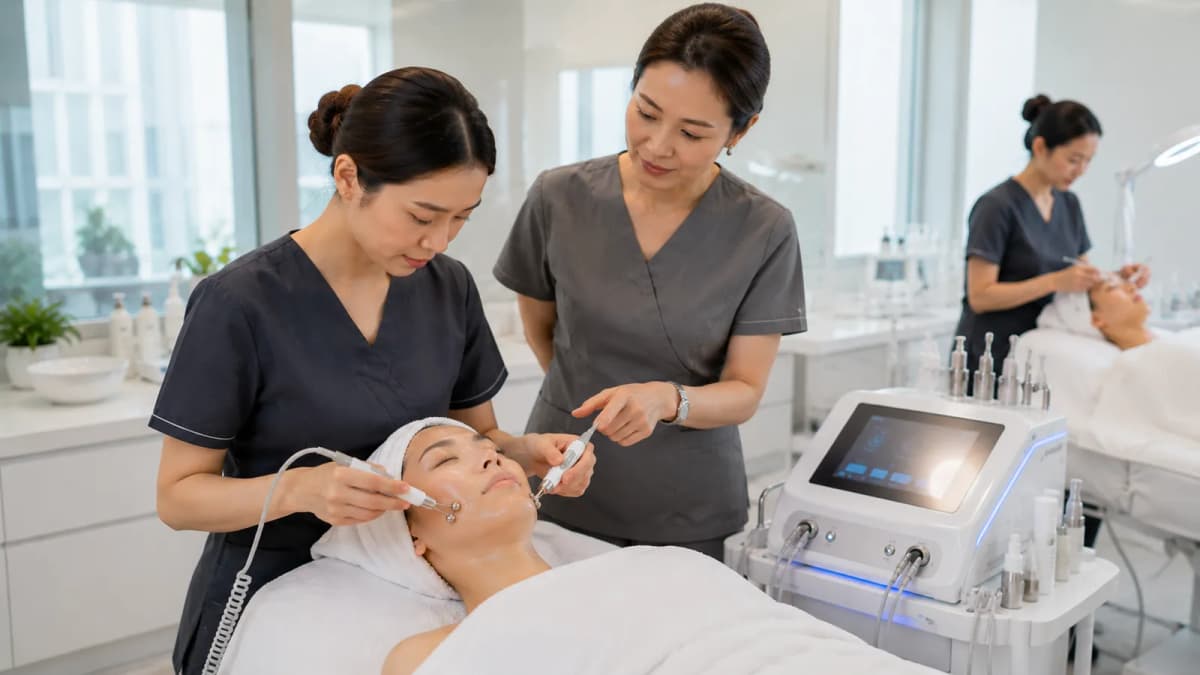
"Can studying massage really lead to a job overseas?" Yes — Thai therapists have been doing it for decades. But the reliable route isn't about taking a gamble: it's about preparing the right certification, language skills and legitimate channels while you're still in Thailand.
Where Thai therapists are in demand
The Middle East (Dubai, Qatar, Saudi Arabia) — luxury hotels and spas expanding fast, with good pay and housing provided · The Maldives and island resorts — five-star resorts hire Thai therapists continuously · Cruise ships and yachts — travel the world earning in dollars · Europe and East Asia — upscale hotel spas in major cities. Work-visa conditions vary by country and employer.
What foreign employers screen for
Three things always come first: (1) a verifiable certification — an international standard like CIDESCO tells a foreign HR team instantly what level you trained to, with no guessing from local certificates they don't recognise; (2) real skill — many employers run a practical trade test before hiring; (3) English at a guest-communication level.
Prepare from Thailand, step by step
1. Study with a properly licensed institution — check that the school is licensed by the Ministry of Education and offers MOH-certified programmes, so you can legally start working in Thailand and build experience.
2. Earn the international credential — for goals abroad, the 1,200-hour CIDESCO Beauty Therapy Diploma is the main route (~8 months of study, examinations under CIDESCO's conditions). Adele & Smith is one of Thailand's CIDESCO Training Schools (TH828).
3. Build experience and language — 6–12 months of spa work in Thailand alongside language practice makes your profile far stronger at interview.
4. Apply through legitimate channels — recruitment agencies registered with Thailand's Department of Employment, or direct applications to hotels and cruise lines. Beware of unlicensed brokers demanding lump sums for promises. The school guides graduates toward safe channels.